


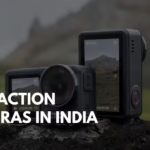


The DJI Pocket 2 is a compact handheld 3-axis gimbal camera designed for vloggers, travelers, and creators who want smooth video and excellent image quality in a small form factor. It improves over the original Pocket/Osmo Pocket in many areas sensor, lens, audio, features — while maintaining portability.
Pocket 2 is a small gimbal-camera combo by DJI. It combines a stabilized 3-axis gimbal with a 1/1.7-inch CMOS sensor, high quality audio system, smart features, and creative video/photo modes. It’s built for users who want more than a phone’s camera but less bulk than a full rig.
Key Features & Specifications
What’s Improved (vs Original Osmo Pocket & Similar)
- Better Image Quality: Larger sensor (1/1.7-inch), improved lens (wider FOV) gives more immersive shots and better light gathering.
- Zoom & Flexibility: 8× zoom in 64MP high-res mode; lossless zoom in lower res video/photo modes.
- Audio Upgrade: Four mics, improved stereo, audio zoom, etc., making it one of the better-built small cameras for sound.
- New Controls: Mini Control Stick for better manual control.
- More Creative Modes: More options (AI Editor, Story Mode, etc.) so less post editing is needed.
Strengths & Weaknesses
✅ Pros
- Very good stabilization via gimbal — smoother video than most phones.
- Excellent photo quality (especially in good light) and very usable video quality up to 4K60.
- Compact and portable; easy to carry around.
- Strong audio system.
- Many creative modes built in.
❌ Cons
- Low-light performance is still limited; small sensor means noise shows up when light drops.
- Battery life while using high resolutions or advanced modes may drop significantly.
- Some features (like certain HDR video or zoom) may degrade image quality or only be available under specific modes.
- Requires external accessories for some advanced setups.
Who Should Buy It
- Vloggers, travel content creators, or anyone who wants professional-looking stabilized footage without lugging heavy gear.
- People who care about portability but still want high image/audio quality.
- Users who want built-in creative tools (timelapse, motionlapse, AI Editor) to simplify production.
Might be less ideal if your priority is ultra-low light, long video at very high frame rates beyond 60 fps, or if you need rugged / weatherproofing built-in without accessories.
Comparisons
| Device | Where Pocket 2 Excels | Where It Trails / Trade-Offs |
| Original Osmo Pocket | Bigger sensor, more megapixels, better audio, wider lens, more modes. | Original is cheaper; maybe simpler to use if you don’t need the extras. |
| Smartphones (flagship) | Stabilization + gimbal gives smoother motion; more creative shooting modes; better audio in many cases. | Phones may have better sensor size or better low light if top-end models; more convenience for casual snaps. |
| Action cams | Better handheld stability; more cinematic look; better for walking / vlogging. | Action cams often rugged, waterproof, more durable in extreme conditions; may handle higher fps in some models. |
FAQs
Q1: What resolutions and frame rates does Pocket 2 support?
4K at up to 60 fps; 2.7K and 1080p at similar frame-rates; slow motion (1080p @ 120fps / 240fps in certain modes).
Q2: How is the audio quality?
Audio is quite good: four microphones (Matrix Stereo), sound tracking, audio zoom, wind noise reduction. Much better than many compact cameras.
Q3: How long does the battery last?
Around 140 minutes under optimal settings (lower resolution, 1080p, moderate usage) per reviews.
Q4: Does it support RAW photo and wide angle / panorama?
Yes, supports RAW (DNG) in photo mode; panoramas (3×3, 180°) are supported. Wide FOV (93°), lens is f/1.8.
Q5: What audio features are new?
The Matrix Stereo system with four mics; directional audio; sound tracking; audio zoom; wind noise reduction.
Q6: What storage is available?
microSD support (up to 256 GB commonly), file formats JPEG / DNG, video formats MP4/H.264.
Verdict
The DJI Pocket 2 is a well-rounded gimbal camera that hits a sweet spot for creators who want high image and audio quality in a pocketable form. If you’re often on the go, need steady video without dragging heavy rig, and care about creative flexibility, this is a top pick. It isn’t perfect in low light, and using premium modes will cost you in battery and storage—but overall it offers excellent value and utility.


